Unlocking Creativity in Midlife: Why Your Best Ideas May Still Be Ahead
There's a pervasive cultural myth that creativity peaks in youth and steadily declines thereafter. We're told that innovation belongs to the under-30 crowd, that radical ideas emerge from fresh minds unburdened by experience. But research tells a remarkably different story.
Studies of creative achievement across disciplines reveal that many people produce their most significant work in their 40s, 50s, and beyond. Vera Wang entered fashion design at 40. Julia Child published her first cookbook at 50. Frank Lloyd Wright designed the Guggenheim Museum at 76. These aren't exceptions; they represent patterns visible throughout history.
The Science of Ageing Creativity
Neuroscience research shows that while certain cognitive abilities change with age, creative thinking doesn't necessarily diminish. What shifts is the type of creativity we naturally gravitate towards.
Psychologist Dean Keith Simonton distinguishes between "conceptual" and "experimental" innovation. Conceptual innovators work from bold new ideas, often early in their careers. Experimental innovators build their breakthroughs through accumulated knowledge and trial-and-error, often reaching their peak later in life.
As we age, our brains become better at pattern recognition, integrating diverse information, and seeing connections across domains. These are precisely the skills that fuel creative insight. Experience becomes an asset rather than a liability.
Overcoming Creative Barriers
If the capacity for creativity remains robust, why do so many of us feel less creative as we age? The obstacles are often psychological and circumstantial rather than neurological:
Fear of Judgment
With accumulated professional identity comes vulnerability. We've built reputations, established expertise. Creative exploration risks looking foolish or incompetent. A 25-year-old trying something new is learning; a 50-year-old doing the same faces different social interpretations.
Overcoming this requires consciously cultivating beginner's mind—permission to be unskilled, to experiment, to fail without it threatening our sense of self-worth.
Routine and Responsibilities
Midlife typically brings significant obligations: career demands, family responsibilities, financial pressures. Creative work requires unstructured time, mental space, and energy—precisely what midlife seems designed to eliminate.
Yet this challenge is largely about prioritisation. We find time for what we value. Treating creative practice as essential rather than optional changes what's possible.
Comparison and Perfectionism
Decades of consuming excellent work raises our standards. We know what good looks like, which makes our early efforts feel inadequate. The distance between our taste and our current ability can be discouraging.
Ira Glass famously noted that creative people have taste that outpaces their skill early on. The solution isn't lowering standards but accepting the gap as temporary and necessary. Every expert was once a beginner.
Practical Techniques for Creative Renewal
Cross-Pollination
One advantage of midlife is breadth of experience. Creativity thrives at intersections—between disciplines, between art and science, between professional knowledge and personal passion. Your unique combination of experiences is your creative advantage.
Actively seek inspiration outside your usual domains. If you're in business, explore art. If you're technical, study philosophy. The most innovative ideas often come from applying insights from one field to problems in another.
Constraints as Catalysts
Counter-intuitively, limitations often enhance creativity. Given unlimited options, we freeze. Given a specific constraint, we innovate.
Try setting creative constraints: write a story in exactly 100 words. Design something using only three colours. Solve a problem without your usual tools. Constraints force novel approaches and prevent defaulting to familiar solutions.
Divergent Thinking Exercises
Divergent thinking—generating multiple solutions to open-ended problems—is trainable. Regular practice strengthens creative fluency:
Alternative Uses: Take a common object and list 20 unusual uses for it. Push past obvious answers.
Random Word Association: Choose two unrelated words and find connections between them. This builds pattern-recognition and flexible thinking.
Perspective Shifts: Consider a challenge from multiple viewpoints: How would a child approach this? An engineer? An artist? A historian?
The Importance of Play
Creativity requires a playful mindset—experimentation without immediate utility, exploration without predetermined outcomes. Yet adult life systematically eliminates play in favour of productivity.
Reclaiming play might mean: doodling without purpose, cooking experimental dishes, building something impractical, engaging in improv games. These aren't frivolous distractions from serious work; they're the foundation of creative thinking.
Creating Conditions for Creative Flow
Psychologist Mihaly Csikszentmihalyi's research on "flow" states—periods of deep, effortless concentration—reveals that certain conditions facilitate creative work:
Clear Goals: Not rigid outcomes, but directional intention. "Explore watercolour techniques" works better than "paint a masterpiece."
Immediate Feedback: Work where you can see results and adjust. This is why many find cooking creatively satisfying—you taste, adjust, taste again.
Challenge-Skill Balance: Tasks slightly beyond current ability, stretching but not overwhelming. Too easy breeds boredom; too difficult breeds anxiety.
Minimised Distractions: Protect creative time fiercely. Silence notifications, close email, establish boundaries. Deep work requires sustained attention.
The Role of Community
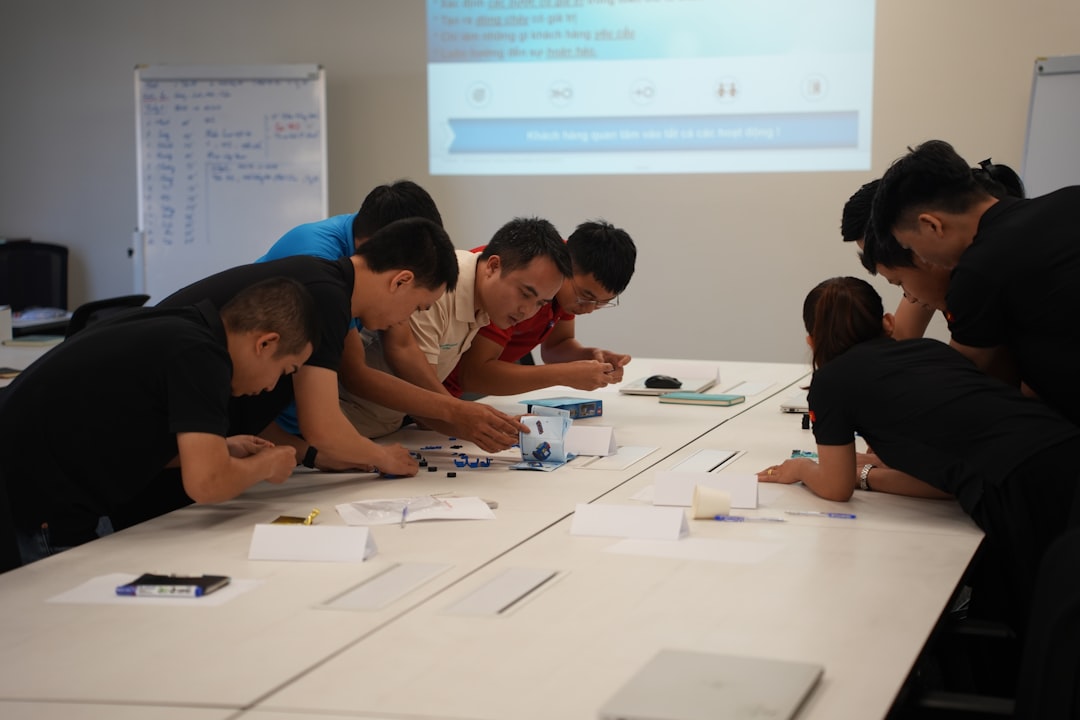
Creativity needn't be solitary. Collaboration, feedback, and supportive community significantly enhance creative output. Jackshire.site's Creative Thinking Workshops provide precisely this environment—spaces where adults can experiment, share, and develop creative skills without judgment.
Finding or forming a creative community offers multiple benefits: accountability for regular practice, diverse perspectives on your work, encouragement through inevitable rough patches, and exposure to others' creative processes.
Embracing Process Over Product
Perhaps the most liberating shift in midlife creativity is moving from outcome-focused to process-focused engagement. In youth, creativity often serves ambition—we create to achieve recognition, career advancement, external validation. In midlife, we can create simply because the act itself is meaningful.
This doesn't mean abandoning standards or not sharing work. It means deriving satisfaction from the practice itself rather than exclusively from results. The author who writes for the joy of constructing sentences, not just completing books. The cook who experiments for the pleasure of combining flavours, not just serving impressive meals.
Your Creative Renaissance
The Italian Renaissance—that explosion of art, science, and innovation—was largely driven by people in midlife and beyond. Leonardo, Michelangelo, Galileo produced their most significant work after 40, drawing on decades of accumulated knowledge, refined technique, and deep understanding.
Your midlife offers similar potential. You possess unique combinations of knowledge, perspective, and experience that younger you couldn't access. The question isn't whether you have creative capacity—neuroscience confirms you do—but whether you'll claim it.
This requires intention: protecting time, cultivating conditions, pushing through discomfort, connecting with others, and trusting the process. It means treating creativity not as a luxury for those with spare time, but as essential nourishment for human flourishing.
Your most innovative, significant, creative work may very well lie ahead. The only way to discover this is to begin.